
Gaslit – Arts Council England Funded Project
An artist-led project, funded by an award from Arts Council England, exploring the psychological dynamics of narcissistic abuse. Developed in collaboration with a psychologist and individuals with lived experience, the work translates complex emotional and behavioural patterns into visual form, creating accessible tools for reflection, understanding, and discussion.
Concept
The project is rooted in an exploration of early experience, memory, and emotional development, drawing on ideas of the ‘inner child’ and the lasting impact of formative relationships. It considers how early patterns of attachment and experience can shape perception, behaviour, and emotional response in adulthood.
The work draws on research into the narcissistic abuse cycle, including stages such as idealisation, devaluation, and discard. These patterns, often difficult to identify or articulate, are explored through a visual language that translates psychological experience into image, symbol, and sequence.
Developed in collaboration with a psychologist and individuals with lived experience, the project seeks to make these experiences more visible and accessible, supporting recognition and understanding through visual means.
It also considers the role of relational dynamics and early environments, exploring how attachment and learned behaviours may shape both vulnerability and interpersonal patterns. Without drawing fixed conclusions, the work reflects on possible parallels and points of connection within these experiences, opening space for reflection on how such patterns can form and repeat.
These ideas are expressed through a distinctive visual language, combining illustrative imagery, pattern, and symbolic composition to externalise internal experiences. Repetition, fragmentation, and shifts in scale are used to reflect cycles of behaviour and emotional intensity, allowing complex psychological dynamics to be encountered in an immediate and intuitive way.
Process
Veronica led the development of the project from initial research through to final outcomes, working closely with a psychologist to ensure accuracy and sensitivity in representing complex psychological dynamics.
Through a series of exploratory stages, visual motifs and narrative structures were developed to reflect recurring patterns within the abuse cycle. The process involved translating abstract emotional experiences into symbolic and illustrative forms, creating a visual framework that could be engaged with intuitively.
Outcome
The project resulted in a series of large-scale artworks that map the stages of the narcissistic abuse cycle through image and composition.
These works are permanently installed at the Nightingale Psychiatric Hospital in London, where they are used within therapeutic group settings to support discussion, recognition, and shared understanding.
The visual nature of the work allows complex experiences to be externalised, offering an alternative entry point for individuals who may find verbal expression difficult.
Impact
The project has been used as a tool within therapeutic contexts, supporting individuals in identifying patterns of behaviour and reflecting on personal experiences.
By translating psychological frameworks into visual form, the work creates a bridge between clinical understanding and lived experience, enabling more accessible and inclusive forms of engagement.
Context
The project was funded through an award from Arts Council England and developed in collaboration with healthcare professionals, contributing to ongoing conversations around art, mental health, and public-facing therapeutic resources.
The project received critical coverage, including a feature and review published by the British Psychological Society.

Love Bombing
At the beginning of a relationship, the narcissist may engage in ‘love bombing’, an intense display of attention, affection, or gifts, carefully attuned to what the other person desires or feels they are missing. This behaviour can create a rapid sense of connection and emotional attachment.
While it may initially feel overwhelming in a positive way, love bombing is often a form of manipulation designed to establish trust and dependency early in the relationship.
“It may start out feeling like everything you have always wanted… The relationship moves rapidly, becoming deep and committed very quickly.”
— GoodTherapy.org


Devaluation
During the devaluation stage, the dynamic of the relationship shifts, and the individual may begin to feel uncertain, criticised, or emotionally unsafe. Affection and validation are often withdrawn or replaced with inconsistency, creating confusion and instability.
At the same time, the fear of losing the relationship can intensify. The individual may attempt to make sense of the change in behaviour, holding onto the memory of earlier connection and hoping for its return. This can lead to a cycle of self doubt, justification, and increased emotional dependence.


Discard
During the discard stage, the relationship is abruptly or gradually brought to an end, often without clear explanation or resolution. The connection that once felt intense and significant may be withdrawn, leaving a sense of shock and confusion.
This stage reflects a pattern in which relationships are used to meet emotional needs tied to validation and self worth. When these needs are no longer fulfilled, or when expectations of mutual care, empathy, or boundaries are introduced, the dynamic may shift, and the individual may be rejected or replaced.
For the person experiencing this, the sudden loss of connection can be disorienting, particularly when it contrasts so strongly with the earlier intensity of the relationship. The experience may leave unresolved questions and a sense of disbelief at how quickly the relationship has changed.
“Ultimately, the person with narcissism discards his or her dating partner, who served as a source of narcissistic supply… The outcome is often shocking for the survivor, unclear as to how someone that he or she fell so deeply in love with could throw it all away.”
— GoodTherapy.org


Leaving
During this stage, the individual may experience a conflict between wanting to stay and wanting to leave the relationship. The emotional attachment formed earlier can make separation feel difficult, even when the relationship has become harmful.
Leaving can be a challenging and distressing process, often accompanied by fear, uncertainty, and a pull toward earlier positive experiences. There may be a tendency to hold onto memories of connection or the hope that the relationship might return to what it once appeared to be.
This stage can involve a gradual recognition of imbalance, where one person gives repeatedly while their own needs remain unmet. Developing awareness of personal boundaries, emotional needs, and self worth can support the process of change.
Over time, healing may emerge through the understanding that a relationship should be mutual, and that care, respect, and reciprocity are fundamental.
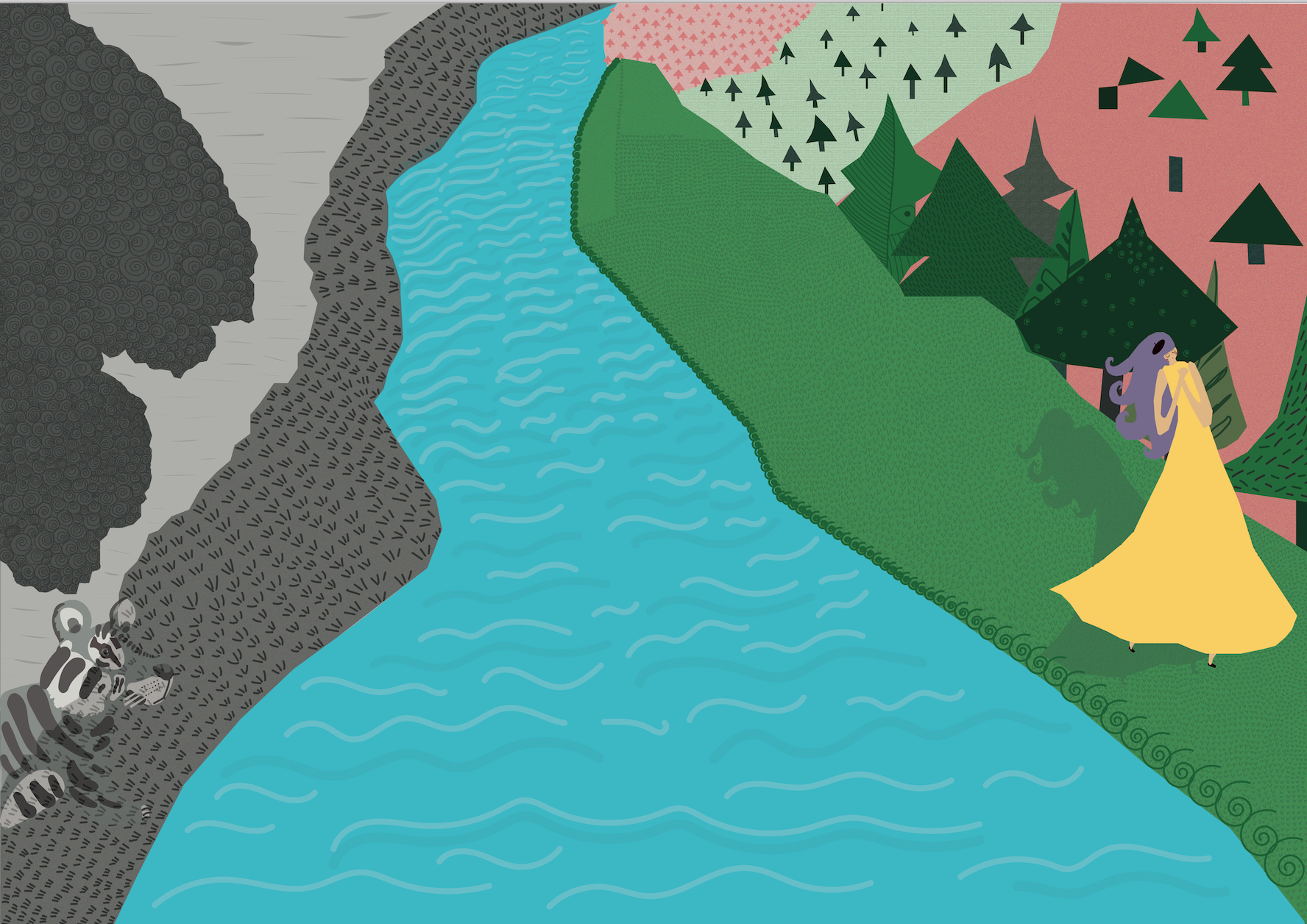

Partner
Individuals who have experienced unmet emotional needs in early life, or who developed patterns of low boundaries, may be more vulnerable within these dynamics. Early experiences of care and attachment can shape expectations of relationships, influencing how connection, validation, and security are sought in adulthood.
Within this dynamic, the other person may present themselves as a source of reassurance or stability, appearing to meet emotional needs that feel longstanding or unresolved. This can create a strong sense of connection, particularly where these needs have not previously been fulfilled.
In some cases, there may be overlapping or parallel experiences in early environments, although these do not lead to identical outcomes. The work acknowledges these complexities without drawing fixed conclusions, instead creating space to reflect on how relational patterns can form and repeat over time.

Narcissist’s Childhood
It is important to recognise that all individuals have emotional needs for validation, connection, and recognition. Difficulties can arise when these needs become central to how relationships are formed and maintained, shaping interactions in ways that may become harmful to others.
The work acknowledges that narcissistic traits exist on a spectrum, and that not all individuals with such traits will meet the criteria for a clinical diagnosis. It also recognises that patterns of behaviour are often shaped over time through a combination of early experience, environment, and learned responses.
Early environments may include experiences of inconsistency, neglect, or imbalance in caregiving, which can influence how self worth and relationships are understood and expressed. These experiences do not determine a fixed outcome, but may contribute to the development of relational patterns centred around control, protection, or the need for validation.
The project also reflects on the possibility of parallels between early experiences, where both individuals within the dynamic may have encountered forms of emotional disruption or unmet need. These shared points of origin can, in some cases, contribute to a strong initial sense of connection, while leading to very different ways of relating in adulthood.
“Personality disorders are developed over time through childhood experiences, genetics, and environment.”
— Psycom.net

Weighted Blanket Installations
This body of work forms part of the wider research and exhibition, incorporating quilts developed through participatory workshops with individuals who have experienced narcissistic abuse.
During these sessions, participants were invited to explore and illustrate metaphors relating to their experiences, including how the relationship felt, how they imagined the future, and ways of responding to their ‘inner child’. These individual contributions were translated into textile form and assembled into weighted blankets.
The blankets act as a physical and symbolic representation of internal conflict, reflecting both the restrictive nature of psychologically abusive relationships and the simultaneous sense of familiarity, comfort, or attachment that can make them difficult to leave.
Accompanying elements, such as the rocking chair, reference the domestic environment, acknowledging the home as a space that can hold both safety and vulnerability, and where such dynamics often remain unseen.


Quilted Blanket No. 1 was developed through workshops with survivors of domestic abuse, translating personal experiences into textile form.
The weighted blanket reflects the tension between restriction and comfort within psychologically abusive relationships.


Quilted Blanket No. 3 was developed through a series of workshops with a wellbeing group of young people at Ambition Aspire Achieve in Newham, including participants with additional needs.
The sessions focused on exploring interpersonal relationships in an accessible and supportive way, encouraging participants to reflect on what makes a positive connection, how others’ behaviour can affect their feelings, and how to recognise and trust their own responses.
Participants created illustrations representing friendship, emotional awareness, and personal boundaries, which were then translated into textile form and assembled into a collaborative quilt.
