Transitional Memories – Intergenerational Quilting Project
An artist-led participatory project exploring memory, attachment, and transitional objects through textile processes, bringing together children, families, and community members to translate personal stories into a shared visual artwork.
Concept
This project draws on research into the emotional significance of memory objects and early attachment, exploring how sensory processes and making can reconnect participants with personal and often deeply held experiences. It is informed by ideas of transitional objects and the role of play in emotional development, creating space for participants to explore memory and identity through making.
Textiles were used as both a material and conceptual framework, with patchwork acting as a method of combining individual narratives into a collective visual form. Through processes of drawing, mark-making, and fabric manipulation, participants explored objects connected to memory, comfort, and identity.
Process
Veronica designed and led a series of workshops with Year 4 students, SEN groups, and parents and carers. Participants were invited to reflect on personal memory objects and translate these into visual forms through drawing and textile techniques.
These individual responses were developed using natural dye, embroidery, and sensory mark-making processes, with an emphasis on accessibility, experimentation, and material engagement.
Outcome
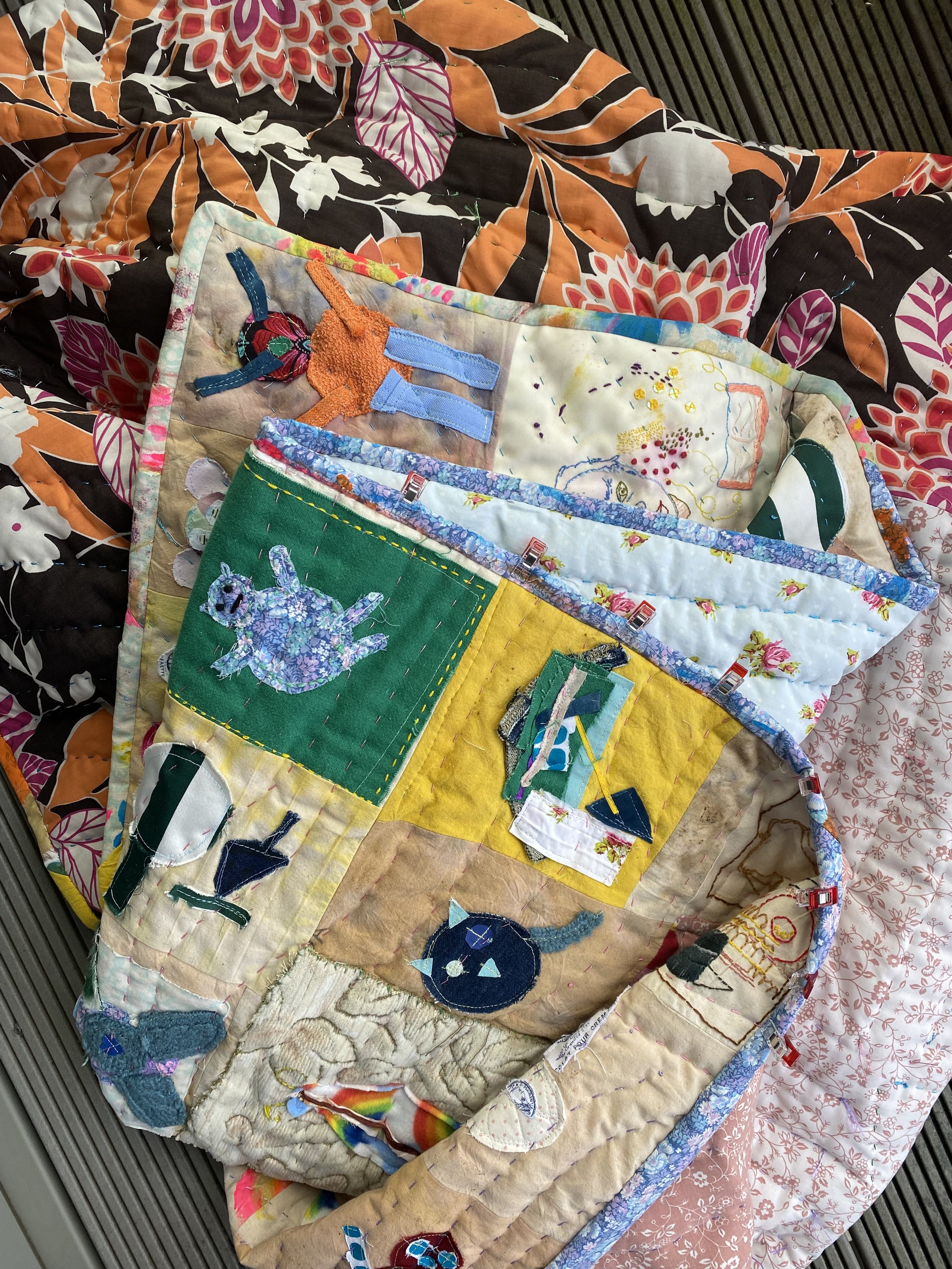
The project culminated in a large-scale collaborative quilt, bringing together multiple individual contributions into a unified artwork.
The final piece reflects both personal and shared experience, combining fragments of memory into a visually rich and cohesive form. The use of natural dye and hand processes reinforces the material connection between memory, making, and storytelling.
Impact
The project created space for participants to reflect on personal experiences and share stories across generations, fostering connection through creative practice.
By working with memory objects and sensory processes, participants engaged with themes of attachment, identity, and belonging in an accessible and supportive environment.
The project is referenced in Chapter Four of The Cloth Botherer by Angela Maddock, reflecting its connection to contemporary textile practice and research.